📖 Summarize this post with AI:
ChatGPT | Perplexity | Claude | Grok
⚡ Key Takeaways
- A brain injury drunk driving accident lawyer in Houston must prove severity, permanence, and specific cognitive impact — not just that a TBI occurred.
- TBI ranges from concussion (mild) through severe — even mild TBI can produce long-lasting compensable cognitive impairment.
- Neuroimaging — CT, MRI, and fMRI — forms the foundation of TBI proof, but normal imaging does not rule out compensable brain injury.
- A formal neuropsychological evaluation is often the most powerful TBI damages evidence available.
- Life-care planners calculate the lifetime cost of TBI treatment — which can run into the millions for moderate-to-severe cases.
- Insurers routinely dispute causation and severity in TBI claims — making expert-built evidence essential.
- The two-year statute of limitations under Texas Civil Practice and Remedies Code Section 16.003 runs from the crash date — not the date TBI is confirmed.
A brain injury drunk driving accident lawyer in Houston faces a unique evidentiary challenge: traumatic brain injury is invisible to an outside observer, frequently misunderstood by insurance adjusters, and sometimes dismissed because initial imaging appears normal — even when the underlying damage is significant and permanent. When a drunk driver’s crash causes a TBI, the legal case must prove that the injury occurred and was caused by the crash, and demonstrate its full impact in terms a jury can quantify in dollars.
What Is TBI and Why Do Drunk Driving Crashes Cause It?
Traumatic brain injury occurs when an external force disrupts normal brain function — typically through direct impact or rapid acceleration and deceleration. In drunk driving crashes, the violent forward-and-back motion of the head during high-impact collision causes the brain to strike the inside of the skull, creating bruising, axonal fiber tearing, hemorrhage, and swelling. Because drunk drivers frequently cause high-speed collisions, TBI is among the most common catastrophic injuries in Houston DUI crash cases.
The Diagnostic Evidence That Establishes TBI
Emergency Neuroimaging
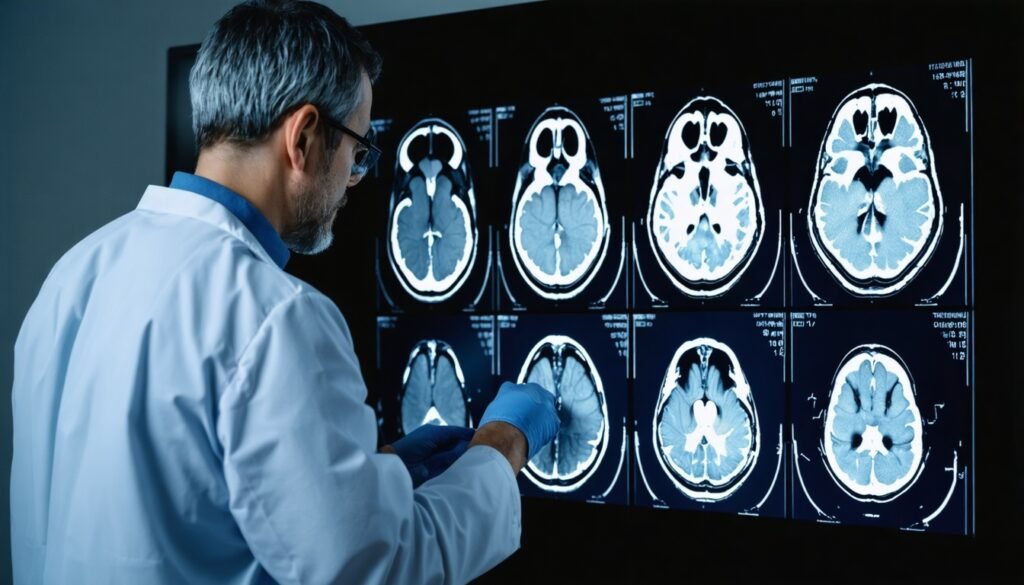
CT scans taken at the emergency room identify acute hemorrhage, skull fractures, and cerebral contusions. However, CT scans do not detect axonal injury or many forms of mild-to-moderate TBI — a normal CT scan does not rule out a compensable brain injury. MRI and diffusion tensor imaging (DTI) are more sensitive to white matter damage. Functional MRI (fMRI) can document disruptions in brain activity even when structural imaging appears normal.

Neuropsychological Evaluation
A formal neuropsychological evaluation conducted by a licensed neuropsychologist measures cognitive function across multiple domains — memory, processing speed, attention, executive function, language, and visuospatial ability — using standardized tests comparable to pre-injury baselines and population norms. It documents the cognitive impact of TBI in objective, measurable terms that a jury can understand and value. It also directly addresses insurance company arguments that the TBI is exaggerated or unrelated to the crash.
Treating Physician and Specialist Opinions
The treating neurosurgeon, neurologist, or physiatrist’s documented opinions on the nature, severity, and prognosis of the TBI must clearly address causation — linking the brain injury to the specific mechanism of the drunk driving crash — and prognosis, identifying which deficits are expected to be permanent.
How Insurance Companies Challenge TBI Claims — and How to Counter Them
Insurance companies defending drunk driver TBI cases deploy three common challenge strategies: the “normal imaging” argument (countered with advanced DTI/fMRI and neuropsychological testing); the “pre-existing condition” argument (countered with pre-crash employment and academic records); and the “soft symptom” argument dismissing memory loss and mood changes as subjective (countered with objective neuropsychological test scores and vocational expert testimony on work capacity).
The Damages Available in a Houston TBI Drunk Driving Case
TBI damages span the full spectrum: past and future medical expenses, lost wages, reduced earning capacity (often the largest component in moderate-to-severe TBI), and non-economic damages for pain, suffering, personality change, and loss of independence. For a broader view of how these damages are valued, see our guide on how a Houston drunk driver injury attorney calculates compensation.
The Life-Care Plan: Projecting TBI Costs Over a Lifetime
In moderate and severe TBI cases, a certified life-care planner creates a comprehensive itemized projection of future medical and personal care needs — covering all anticipated appointments, medications, therapies, equipment needs, and home modifications over the victim’s remaining life expectancy. A well-constructed life-care plan transforms abstract future suffering into a concrete financial projection a jury can evaluate and award. See our related guide on what makes catastrophic injury drunk driver cases different for more on the life-care planning process.

Why Retaining a Brain Injury Drunk Driving Accident Lawyer Early Matters
TBI cases require early action on two fronts simultaneously. The liability evidence — surveillance footage, BAC records, bar receipts — disappears within 48 to 72 hours. The medical evidence must also be preserved as the injury evolves: emergency room records and initial neuroimaging capture the acute presentation. The two-year statute of limitations under Texas Civil Practice and Remedies Code Section 16.003 begins on the crash date, not the date a TBI diagnosis is formally confirmed. Retaining a catastrophic injury drunk driver lawyer in Houston as soon as possible protects both the evidence and the timeline.
Can you have a compensable TBI if your initial CT scan was normal?
Yes. CT scans frequently miss mild-to-moderate TBI including diffuse axonal injury. Advanced neuroimaging — DTI, fMRI — and formal neuropsychological testing can document significant brain injury that structural imaging misses. A normal CT scan is not a defense against a well-built TBI claim.
How long do I have to file a brain injury claim after a Houston DUI crash?
Under Texas Civil Practice and Remedies Code Section 16.003, the statute of limitations is two years from the date of the crash — not the date a TBI diagnosis is formally confirmed. Do not wait for a definitive diagnosis before retaining an attorney.
About This Guide
Produced by the editorial team at Houston Drunk Driving Lawyers Guide. Legal references cite current Texas statutes. For informational purposes only. Not legal advice.